Oregon Trail Survival Guide
Food, cooking, medkits, wheels, ferry money, church revives, and the threat order that keeps a four-player wagon alive.
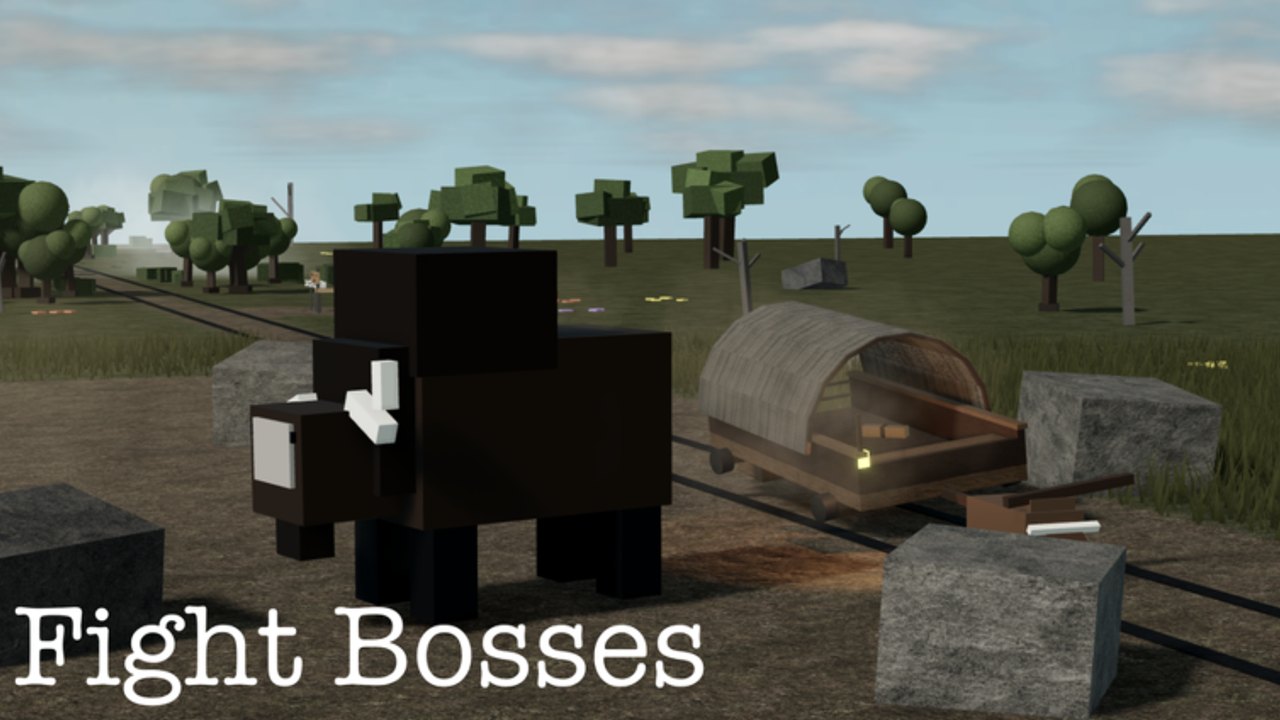
Survival on Oregon Trail (Roblox) is not a single meter — it is a stack of habits that keep a four-player wagon rolling west. Food must be hunted and cooked. Medkits must be found before the next fight. Wheels must be guarded from hyenas and other wildlife. Cash must be reserved for the ferryman. When someone dies, the town church offers a revive chance, not a promise. This Survival Guide turns those observations into a checklist your party can run every session.
If you are brand new, skim Getting Started first. For the full route shape, pair this page with the Walkthrough. For meat and crates, use Hunting and Loot. For four-player role splits, open Multiplayer. Boss badge names live on Bosses. Cross-check Updates after patches, and use Codes, the Tier List, Tools, Players, and the Wiki when you need those hubs.
The survival loop
Every stable run repeats the same loop:
- Stock-check before you commit to a long stretch.
- Move the wagon west while someone watches the wheels.
- Hunt when supplies dip, then cook before eating.
- Pick up medkits, spare wheels, and crate loot without abandoning the wagon.
- Hold cash for known paid crossings.
- Recover downs with medkits, carries back to the wagon, and church attempts when available.
- Reset the stock-check and repeat.
Break any link and the run frays. Parties that hunt endlessly with no wheel guard lose the wagon. Parties that guard perfectly but never cook starve with raw meat in the inventory. Parties that win every scrap fight still wipe when the last medkit was wasted on a scratch.
Food and cooking
Hunger is a slow fail that feels sudden. Starter flour and early rations buy time; hunting refills the real supply. Cook hunted meat at a fire before anyone eats. Eating in moderation matters — one observed party reached a fire with nothing left to cook because they burned through the stash. Share portions across all four players instead of letting one person feast.
Raw ox or horse meat is not a finished meal. Treat cooking as mandatory upkeep, not a roleplay flourish. When the cook fire is lit, keep a lookout; wildlife and bandits do not pause for dinner. Deeper animal and crate notes are on Hunting and Loot.
Medkits and medicine
Medkits empty fast. Take every medkit and medicine pickup you find on the trail and in ghost towns. Assign one player to call remaining kit counts out loud after each fight so the party does not discover “zero” mid-chase. Use kits on players who cannot recover on their own; knockdowns are urgent but not always hopeless — teammates have gotten back up, and carrying the fallen back to the wagon is part of recovery.
Do not spend the last kit on a cosmetic injury when a boss fight or bandit wave is clearly next. Survival is triage. The Tier List can help you rank what to spend first when you want a sharper priority order.
Wheels: the real life bar
The ox wagon is the expedition. Wheels are the soft target. Hyenas go directly for them and can tear them off. Rams and other wildlife also punish a neglected wagon. Drive hyenas off before you chase secondary kills. If a pack is on the wheels, the correct play is interrupt and clear — not a heroic hunt fifty studs away.
Spare wheels appear along the trail and in ghost-town loot for a reason. Pick them up. A run that ends with “well, I guess that’s it” after broken wheels is the classic Oregon Trail Roblox failure mode. Protecting wheels is higher priority than sightseeing, gambling tables, or optional landmarks.
Ferry cash and river crossings
Save money for the ferryman. The ferry carries the wagon across for a payment. Swimming has been observed to leave a climber showing hypothermia signs. Paying is the boring, correct option when you have the cash. If your party is broke, that is a planning failure from earlier spending — fix the economy next run instead of gambling the river every time.
Treat ferry prep like a checkpoint: count cash before you commit to the approach, finish cooking if people are starving, and make sure wheels are not already one bite from failure.
Town church revive chance
If someone dies and a town with a church is reachable, try it. A priest has brought a dead teammate back when asked to work a miracle in observed play — a chance, not a guarantee. Do not invent percentage tables; treat it as a recovery attempt worth the detour when the alternative is a three-player wagon with a dead seat.
Towns may also feature a card-gambling table. Treat gambling as curiosity content, not a survival plan. One party found the table ran on “souls” they did not have. Never spend ferry cash or last medkits chasing a side game.
Threat priority order
When multiple problems hit at once, use this order:
- Wheel attackers (hyenas first) — losing wheels ends the run.
- Active player downs — recover or carry before the fight snowballs.
- Immediate predators on people (wolves, bears, rams) — finish the animal so it stops chewing the party.
- Bandits — fight or break contact; observed chases sometimes give up when you flee.
- Loot and sightseeing — only after the wagon and party are stable.
Boss encounters (Big Bison, Old Scratch, Reese Gang, Wolf Mother, Mr. Levi, and ghost variants) are special set pieces. Confirm names on Bosses, but do not ignore wheel defense while you learn a new fight. A badge kill that costs the wagon is still a failed journey.
Ghost towns and “free” loot
Ghost towns can drop spare wheels, medicine, backpacks, and other ground loot. Loot fast. Bandits have been present in observed towns. The survival framing is simple: ghost-town loot is a supply injection, not a vacation. Send a looter and a guard, keep the wagon covered, leave when the inventory bump is done. More detail sits in Hunting and Loot and the Walkthrough.
Party roles that keep people alive
Four players should not all play hunter. Typical survival split:
- Wagon / wheel guard — watches hyenas and keeps the ox moving when safe.
- Hunter / cook — refills meat and runs the fire.
- Fighter / medic — focuses threats and kit usage.
- Flex looter — crates, ghost-town ground loot, spare wheels.
Rotate if someone gets tired, but never rotate into “nobody on wheels.” Expand this on Multiplayer.
Recovery after a bad stretch
If you just survived a messy fight:
- Count medkits and spare wheels.
- Cook anything raw before you roll again.
- Heal or wait out downs near the wagon.
- Confirm ferry cash still exists if a crossing is next.
- Only then push for optional loot or boss attempts.
If the wagon is already crippled, prioritize spare wheels over exploration. If two players are down and kits are empty, play defensive and look for town recovery options instead of forcing a boss.
Survival myths to ignore
- “We can swim the ferry.” Observed hypothermia says otherwise — pay when you can.
- “Raw meat is fine in a pinch.” Cook first; ration after.
- “Statue landmarks are always safe.” Some trailside figures are hostile surprises.
- “Church revive always works.” It is a chance seen in play, not a scripted guarantee.
- “Bosses matter more than wheels.” Badge kills do not move a broken wagon to Oregon.
Linking survival to the rest of the wiki
Use Getting Started for the first-hour framing, Walkthrough for route context, Hunting and Loot for supply sources, Bosses for badge-accurate names, and Multiplayer for teamwork. Check Scripts only with eyes open to risk. Track promos on Codes, priorities on the Tier List, and live changes on Updates.
Survive first. Oregon is west of every shortcut that costs a wheel.
Frequently Asked Questions
Quick answers for Oregon Trail Roblox players.
What is the highest survival priority on Oregon Trail Roblox?
Protect the wagon wheels. Hyenas and other wildlife that strip wheels end runs faster than most other mistakes. Guard the wagon, then manage food, medkits, and ferry cash.
Do I need to cook hunted meat?
Yes. Cook hunted meat before eating and ration shares across the party. Reaching a fire with nothing left to cook is a planning failure.
Should I pay for the ferry or swim?
Pay the ferryman when you can. Swimming has been observed to leave a player with hypothermia signs. Keep cash reserved for the crossing.
Can the town church revive a dead teammate?
There is a chance. A priest has revived a dead party member in observed runs, but it is not a guarantee. Try it when a town church is reachable instead of ending the session immediately.